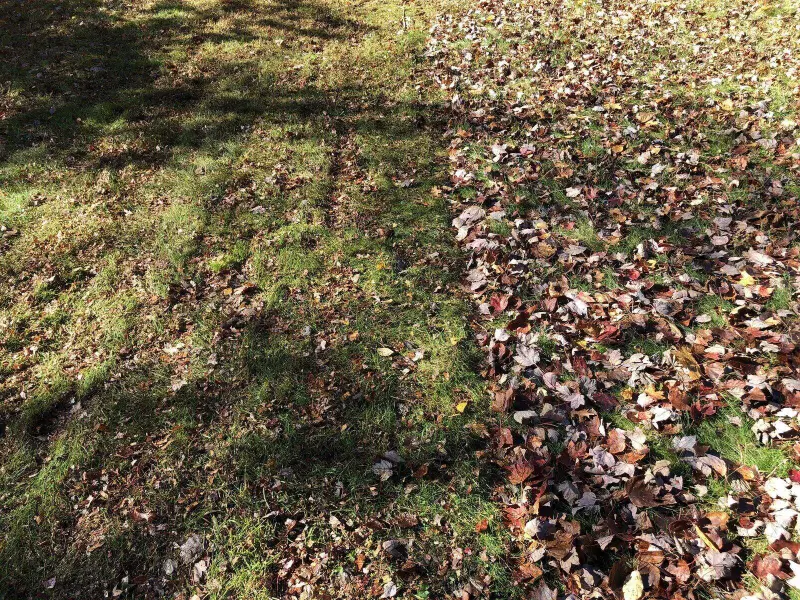
The fastest way to decide what to do with your leaves is to look at the lawn. If you can still see grass through them, mow them where they lie and you are done. If the leaves bury the grass, chop them and move the surplus to beds, a leaf mold bin or storage bags. Most yards end up using all four of the methods below in a single season, in roughly this order.
Leaves are worth the effort. They are mostly carbon plus minerals the tree pulled from the soil, and they break down into the dark, crumbly material sold in bags at the garden center each spring.
Before You Start: Which Leaves Need Care
A few kinds should not go straight back onto your beds.
- Black walnut. Leaves, hulls and roots contain juglone, which stunts tomatoes, peppers, potatoes and some ornamentals. Juglone breaks down when composted, so compost walnut leaves for a few months, then use them, rather than spreading them fresh around sensitive plants.
- Leaves from diseased plants. If a tree or shrub had apple scab, heavy leaf spot or tar spot this year, send those leaves out with yard waste pickup instead. Spreading them back under the same plant restarts the infection next spring.
- Street and gutter leaves. They can carry motor oil, road salt and litter. Use leaves from your own lawn and beds.
- Pine needles and oak leaves. Both are fine as mulch. They break down slowly, so they make slower leaf mold on their own. The common worry that pine needles or oak leaves sour garden soil is overstated; once broken down, their effect on soil pH is small.
Option 1: Mow Them Into the Lawn (Thin Layers)
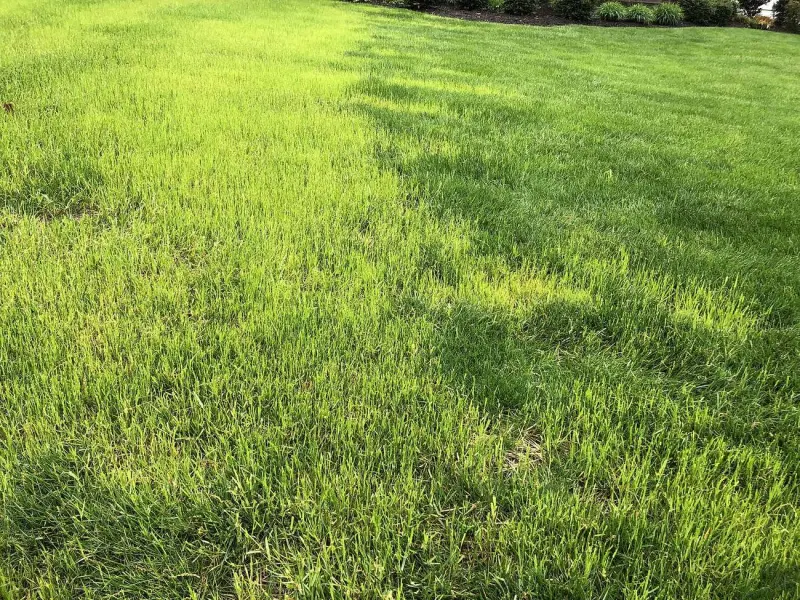
Whole leaves left in a thick layer block light and can smother turf by spring. Chopped into small pieces, they drop between grass blades, where earthworms and microbes break them down over the winter. University turfgrass research has found that mulching a normal fall leaf drop into a healthy lawn does not harm it.
How:
- Mow when the leaves are dry. Wet leaves clump and clog the deck.
- Set the mower at its highest or second-highest height.
- Mow until the pieces are about the size of a dime. A mulching blade helps, but a standard blade with the side chute closed or the mulching plug in works too.
- Check the result. You should see grass through the leaf bits. If you cannot, bag or rake off part of the layer and use it for Option 2 or 3.
Timing is the key. Mow every five to seven days while leaves are falling. A thin layer each week disappears quickly. A foot of wet leaves collected in late November does not.
If you overseeded this fall, keep leaves off the new grass entirely. Blow them off every few days until the seedlings have been mowed two or three times. Our early fall overseeding plan covers the rest of that schedule.
Option 2: Mulch Beds and Borders (Moderate Amounts)
Shredded leaves insulate soil, smother winter weeds and start turning to humus at the bottom of the layer by spring.
Shred first. Whole maple, sycamore and other large, flat leaves mat into a wet sheet that sheds water and air. Run them over with the mower bag attached, or use a leaf vacuum with a shredding impeller. Shredded leaves also take up a small fraction of the space of whole ones, which makes storage easier.
Depth: 2 to 3 inches over perennial beds, shrub borders and empty vegetable beds. In colder zones a slightly deeper layer, up to about 4 inches, helps protect newly planted perennials and fall bulbs from freeze-thaw heaving once the ground has frozen.
Keep it off stems. Leave a gap of a few inches around tree trunks, shrub stems and perennial crowns. Mulch packed against bark holds moisture and gives voles cover.
In vegetable beds, turn the leaves into the top few inches of soil in spring or pull them aside and plant through them.
For wildlife, leave some whole leaves in a few out-of-the-way spots under shrubs. Many moths, butterflies, native bees and beneficial beetles spend the winter in leaf litter, and birds forage through it in spring.
Option 3: Make Leaf Mold (The Big Surplus)
Leaf mold forms when leaves decay slowly, mostly through fungi, instead of in a hot compost pile. The result is dark and spongy, holds a lot of water, and improves both sandy and clay soils. It needs almost no work.
Build a bin:
- About 10 to 12 feet of 3- or 4-foot-tall welded wire or hardware cloth, bent into a circle roughly 3 feet across and closed with zip ties. Expect to pay around $25 to $45 (approximate).
- A shady, well-drained spot where the pile can sit for a year.
Fill it:
- Add leaves in layers, shredded if possible.
- Wet each layer with the hose so the leaves feel like a wrung-out sponge. Dry leaves barely break down.
- Pack the pile down by stepping on it. It will shrink a lot over winter.
- During dry spells, push a hand into the middle. If it feels dry, water it.
No turning is needed, though mixing the pile once in spring speeds it up.
How long: shredded leaves usually become usable leaf mold in about 6 to 12 months. Whole leaves can take one to two years, faster in warm, humid climates and slower in cold, dry ones.
How to tell it is ready: it crumbles in your hand, smells like a forest floor, and you can no longer pick out individual leaves.
No room for a bin? Pack damp, shredded leaves into large black contractor bags, poke a dozen holes in each with a garden fork for air, tie them shut and stash them behind a shed. Check them next fall.
Ways to use it: a 1- to 2-inch mulch around vegetables, mixed into beds before planting, or as up to about a third of a homemade potting mix.
Option 4: Bag Some Dry Leaves for Next Summer's Compost
A compost pile needs browns (dry, carbon-rich material) to balance greens (wet, nitrogen-rich material such as kitchen scraps and grass clippings). In fall you have more browns than you can use. By July you have nothing but greens.
Fill several bags or a lidded trash can with dry, shredded leaves and keep them in a garage, shed or under a tarp. Through spring and summer, add two to three scoops of leaves for every scoop of scraps or clippings. That habit prevents most wet, smelly compost piles. Our guide to composting in a small backyard explains the ratio and what to do if a pile starts to smell.
A Few Practical Notes
- Keep leaves out of the street and storm drains. Leaves washed into drains add phosphorus to local streams and lakes and can block drainage during heavy fall rain.
- Rake onto a tarp. Drag the tarp to the bed or bin instead of lifting armfuls.
- Shredding in a trash can with a string trimmer works, but it throws debris hard. Wear safety glasses and keep hands clear.
- Check your town's rules. Some municipalities ban leaves in household trash or set specific curbside pickup weeks. Many also give away finished leaf compost in spring.
The one thing to do this week: mow the leaves that have already fallen while the layer is still thin. Every week you wait makes every other option on this list more work.