The average American household spends roughly $2,000 or more a year on energy, and in many homes about half of that goes to heating and cooling. You do not need solar panels or a new furnace to bring that number down. A handful of inexpensive changes, most of which take an afternoon or less, can trim a noticeable slice off monthly bills. The savings figures below are rough estimates; your results depend on your climate, local rates, and how your home is built, so check your own bills before and after.
Start by Reading Your Bills
Pull up the last 12 months of electric, gas, and water bills, most of which are available on your utility's website. Look for:
- Your rate per kilowatt-hour. U.S. residential electricity averages roughly 16 to 18 cents per kWh, but it ranges from around 11 cents to well over 30 cents depending on the state.
- Seasonal spikes. A big jump in winter points to heating and drafts. A summer spike points to air conditioning.
- A free home energy audit. Many utilities offer a free or discounted audit, sometimes with free LED bulbs, smart thermostats, or rebates. It is worth a phone call.
1. Use the Thermostat Strategically
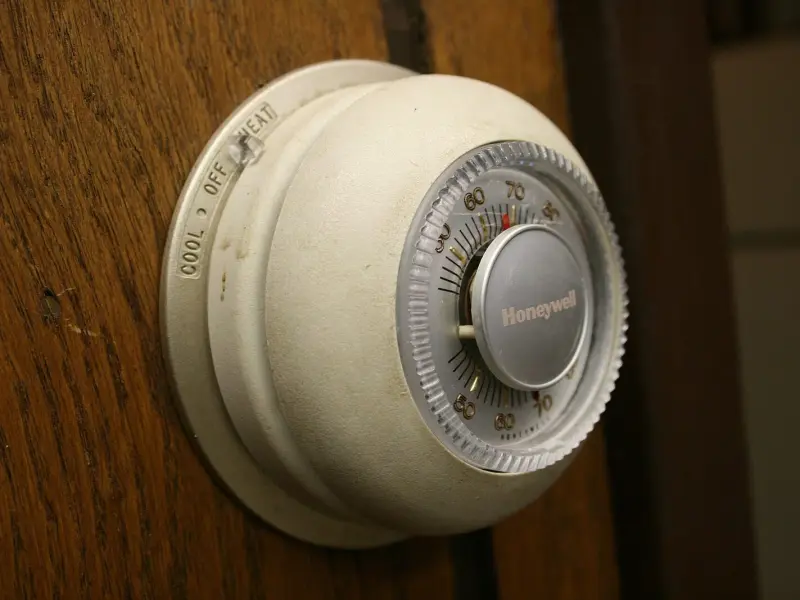
The U.S. Department of Energy estimates that turning your thermostat back 7°F to 10°F for 8 hours a day can save up to about 10 percent a year on heating and cooling.
Practical settings that work for many households:
- Winter: about 68°F when you are home and awake, and 60°F to 64°F while sleeping or away.
- Summer: about 78°F when home, and higher when the house is empty.
A programmable or smart thermostat does this automatically. Basic programmable models cost about $25 to $50; smart thermostats run roughly $100 to $250, and many utilities offer rebates. If you have a heat pump, avoid deep setbacks, which can trigger expensive backup electric heat strips; a setback of 2°F to 4°F is safer, or use a thermostat designed for heat pumps.
Rough savings: $50 to $150 a year for a typical home.
2. Swap the Last Incandescent Bulbs
LED bulbs use about 75 to 80 percent less electricity than incandescent bulbs and last many years longer. A 60-watt incandescent replaced with a 9-watt LED that runs 3 hours a day saves around 55 kWh a year. At 17 cents per kWh, that is about $9 a year per bulb.
Most homes have already switched some bulbs, but closets, garages, outdoor fixtures, and older lamps often still have incandescents or halogens. Start with the lights that stay on longest: kitchen, living room, porch, and any fixture on a timer. Choose a color temperature of 2700K to 3000K for warm light in living spaces, and look for "dimmable" on the package if the fixture is on a dimmer.
Rough savings: $30 to $100 a year, depending on how many bulbs you replace.
3. Seal Drafts Around Doors and Windows
Air leaks are one of the biggest sources of wasted heating and cooling. The EPA's Energy Star program estimates that sealing and insulating can save homeowners an average of about 15 percent on heating and cooling costs.
What You'll Need
- Exterior-grade caulk and a caulk gun
- Self-adhesive foam or V-strip weatherstripping
- A door sweep sized to your exterior doors
- Foam gaskets for outlets and switch plates on exterior walls
- A low-expansion spray foam for larger gaps
- A stick of incense or a lit candle for finding leaks (use with care)
Finding and Fixing Leaks
On a cold, windy day, hold a stick of incense near window frames, door edges, outlets on outside walls, and where pipes and cables enter the house. Wavering smoke shows a draft. Keep the flame well away from curtains, and never leave it unattended.
- Doors: if you can see daylight around a closed door or slide a dollar bill out easily when the door is shut on it, replace the weatherstripping. Add a door sweep if there is a gap at the threshold.
- Windows: caulk gaps between the trim and the wall. For leaky old windows, a clear plastic window insulation kit, about $10 to $25 for several windows, cuts drafts all winter.
- Outlets and switches: turn off the breaker, remove the cover plate, install a foam gasket, and replace the cover. It takes about two minutes each.
- Attic hatch: add weatherstripping around the edge and a piece of rigid foam insulation glued to the top of the hatch.
Wear gloves and eye protection when working with spray foam, which is very sticky and hard to remove from skin. When working on a ladder at upper windows, keep three points of contact and do not stand on the top two steps.
Rough savings: $50 to $200 a year, more in older, drafty homes.
4. Turn Down the Water Heater
Many water heaters are set to 140°F at the factory. Dropping to 120°F is enough for most households and reduces standby heat loss and scalding risk. The Department of Energy estimates this can cut water heating costs by roughly 4 to 22 percent. Check your owner's manual for how to adjust the dial on a gas or electric unit; for electric models, turn off the breaker before removing any access panel.
While you are there, insulate the first few feet of hot water pipe coming out of the heater with foam pipe sleeves, which cost a few dollars.
Rough savings: $25 to $60 a year.
5. Use Less Hot Water
Heating water is often a household's second-largest energy expense.
- Install a WaterSense-labeled showerhead that uses 2.0 gallons per minute or less. Older showerheads can use 2.5 gallons per minute or more.
- Wash most laundry in cold water. The majority of a washing machine's energy goes to heating water, and modern detergents clean well in cold.
- Run the dishwasher only when full, and skip the heated dry setting; open the door and let dishes air-dry.
- Fix dripping faucets. A drip of one per second wastes over 3,000 gallons a year.
Rough savings: $50 to $150 a year combined across water and energy bills.
6. Cut Phantom Loads
Electronics that are "off" but still plugged in, such as TVs, game consoles, printers, and chargers, draw standby power around the clock. These loads can account for 5 to 10 percent of a home's electricity use. Plug entertainment centers and home office gear into an advanced power strip or a smart plug that shuts everything off at night.
Rough savings: $30 to $100 a year.
7. Maintain What You Already Have
- Replace the furnace or AC filter every 1 to 3 months during heavy use. A clogged filter makes the system work harder.
- Vacuum refrigerator condenser coils once or twice a year, and keep the fridge at 37°F to 40°F and the freezer at 0°F.
- Set ceiling fans to spin counterclockwise in summer for a cooling breeze, and clockwise on low in winter to push warm air down. Turn them off when nobody is in the room; fans cool people, not rooms.
- Close blinds and curtains on sunny summer afternoons, and open south-facing ones on sunny winter days.
Common Mistakes
- Cranking the thermostat way up or down. It does not heat or cool the house faster; it just overshoots.
- Closing vents in unused rooms. In most forced-air systems this increases duct pressure and leaks rather than saving energy.
- Sealing a house without ventilation in mind. If you have fuel-burning appliances, make sure CO alarms work and consider a professional audit before heavy air sealing.
Taken together, these changes can realistically save a few hundred dollars a year for many households, with most of the cost recovered within the first season. Start with the thermostat and draft sealing before winter, then work through the rest one weekend at a time.