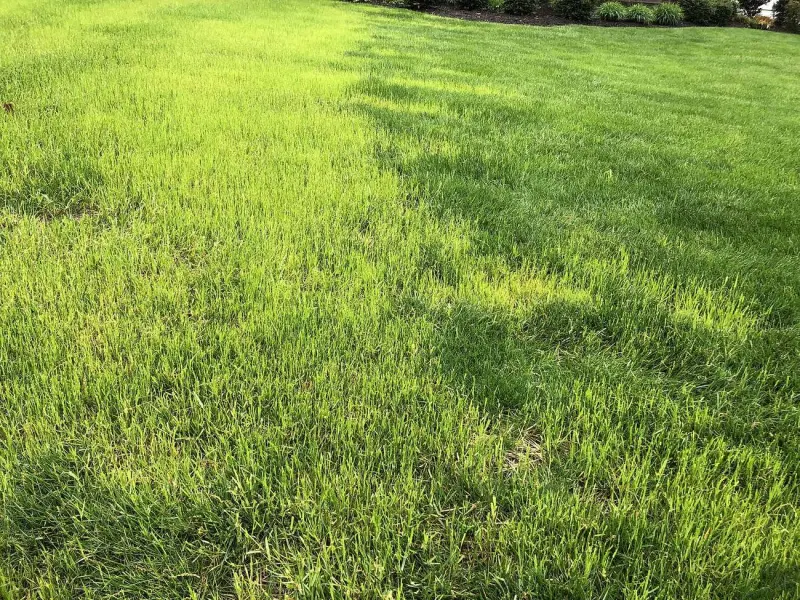
If your lawn came out of summer looking thin, with bare spots along the driveway and a crop of crabgrass where the grass used to be, early fall is your best chance to fix it. Warm soil, cooling air, and more reliable rain give new grass seed ideal conditions to sprout and root in before winter. Overseeding, which means spreading new seed over existing turf rather than starting from scratch, is one of the most effective lawn projects a homeowner can do in a weekend.
First, Know Which Kind of Grass You Have
Timing and seed choice depend on whether your lawn is a cool-season or warm-season type.
Cool-season grasses dominate the northern two-thirds of the country and the transition zone: tall fescue, Kentucky bluegrass, perennial ryegrass, and fine fescues. They grow most in spring and fall and often brown out in summer heat. For these lawns, late August through late September is the prime overseeding window in most areas, or until about 45 days before your average first frost.
Warm-season grasses cover the South and Southwest: Bermuda, zoysia, St. Augustine, and centipede. They go dormant and turn tan after the first frost. Fall is not the time to thicken these with their own seed; that job belongs in late spring when soil warms past 65°F. What Southern homeowners often do in fall is overseed dormant Bermuda with annual or perennial ryegrass for green winter color. That is a cosmetic, temporary choice and the ryegrass dies back the following summer.
The rest of this guide focuses on repairing a cool-season lawn, with notes for winter ryegrass at the end.
When to Start
The ideal conditions are daytime air temperatures in the 60s and 70s °F and soil temperatures between about 50°F and 65°F. A cheap soil thermometer pushed 2 to 4 inches deep will tell you. In practice:
- Upper Midwest and northern New England: mid-August to early September
- Mid-Atlantic, Ohio Valley, and the central Plains: early to mid-September
- Transition zone (Virginia, Tennessee, Kansas, Oklahoma): mid-September to early October
Seed sown too late may sprout but will not have enough root to survive a hard freeze. Seed sown too early may cook in a late heat wave.
What You'll Need
- Grass seed matched to your existing lawn (see below)
- A broadcast or drop spreader
- A core aerator (rental, roughly $80 to $120 a day) or a power dethatcher/slit seeder
- A metal leaf rake or bow rake
- Starter fertilizer labeled for new seedings
- Bagged compost or screened topsoil for bare spots
- Hose, sprinkler, and a hose-end timer if you have one
- Safety glasses, sturdy shoes, and hearing protection for rented equipment
Choosing Seed
Buy seed that matches what is already growing so the patches blend in. Check the label for the percentage of each variety, a germination rate of 85 percent or higher, and "weed seed" under 0.5 percent. Avoid bags with lots of "inert matter" or "other crop seed."
Typical overseeding rates per 1,000 square feet:
- Tall fescue: 4 to 6 pounds
- Kentucky bluegrass: 1 to 2 pounds (small seed, slow to germinate)
- Perennial ryegrass: 4 to 5 pounds
- Sun-and-shade fescue blends: follow the label, usually 4 to 5 pounds
For bare spots, use the higher rate. Measure your lawn by pacing out rectangles and multiplying length by width; a typical quarter-acre suburban lot has about 5,000 to 7,000 square feet of actual turf.
Step 1: Mow Low and Clear the Surface
Mow the lawn about an inch lower than you normally would, usually down to 2 to 2.5 inches, and bag the clippings. This lets seed reach the soil instead of getting caught in leaf blades. Then rake hard with a metal rake to pull out dead grass and loosen the surface of bare patches.
If you have a layer of thatch, the spongy brown mat between the green grass and the soil, thicker than about 1/2 inch, run a dethatcher first. Seed that lands on thatch rarely survives.
Step 2: Aerate
Core aeration pulls plugs of soil about 2 to 3 inches long and leaves small holes across the lawn. Those holes relieve compaction and create perfect pockets for seed. Make two passes in different directions. Leave the plugs on the surface; they break down within a couple of weeks.
Before you aerate, mark sprinkler heads, shallow cable lines, and invisible dog fences with flags. Call 811 a few days ahead if you are unsure where buried utilities run. Rental aerators are heavy and can lurch, so keep both hands on the controls and do not use one on steep slopes.
Step 3: Patch the Bare Spots
For areas larger than a dinner plate, loosen the top inch of soil with a rake and mix in about 1/4 inch of compost. Seed these spots a little heavier than the rest of the lawn and press the seed in by walking over it or rolling it.
Step 4: Spread Seed and Fertilizer
Set your spreader to deliver half the total amount, then cover the lawn in one direction and go back over it at a right angle with the other half. This crisscross pattern avoids stripes. Follow with a starter fertilizer at the label rate. Starter formulas are higher in phosphorus, which helps young roots; check local rules, since some states and counties restrict phosphorus use unless you are establishing new turf.
Do not apply a crabgrass preventer or "weed and feed" this fall. Most pre-emergent herbicides stop grass seed from germinating too, often for 8 to 16 weeks.
Lightly rake the seeded area so seed settles into the aeration holes and makes contact with soil. Seed-to-soil contact is the single biggest factor in germination.
Step 5: Water Correctly
This is where most overseeding jobs succeed or fail.
- Days 1 to 14 (until sprouting): Keep the top 1/2 inch of soil constantly moist. That usually means light watering two or three times a day for 5 to 10 minutes per zone. Do not let it dry out, and do not water so heavily that seed washes into puddles.
- Weeks 2 to 4: As grass appears, cut back to once a day but water longer, about 15 to 20 minutes.
- After week 4: Shift to deep watering every two to three days, aiming for about 1 inch of water per week including rain.
Expect perennial ryegrass to sprout in 5 to 10 days, tall fescue in 7 to 14 days, and Kentucky bluegrass in 14 to 30 days. Patience matters with bluegrass blends.
Step 6: First Mowing and Fall Care
Mow when the new grass reaches about 3.5 to 4 inches, cutting it back to around 3 inches with a sharp blade. Make sure the soil is dry enough that you will not leave ruts. About six to eight weeks after seeding, apply a regular lawn fertilizer to keep the new grass growing into late fall.
Keep fallen leaves off the new seedlings. A thick mat of wet leaves can smother young grass in a week. Use a mulching mower or a light rake rather than a heavy blower setting.
Common Mistakes
- Spreading seed on hard, unprepared soil. Without aeration or raking, much of it washes away or feeds birds.
- Watering deeply but rarely at the start. Germinating seed needs constant surface moisture, not a weekly soak.
- Using cheap "contractor mix." These often contain annual ryegrass that dies in a year.
- Walking on the lawn constantly. Limit foot traffic for three to four weeks.
- Seeding too late. If you are past mid-October in the North, consider dormant seeding in late fall or waiting until spring.
A Note on Winter Ryegrass in the South
To overseed dormant Bermuda for winter color, wait until night temperatures are consistently in the 50s °F, usually October. Scalp the Bermuda short, spread perennial ryegrass at about 5 to 10 pounds per 1,000 square feet, and water lightly daily until it sprouts. Remember that the ryegrass competes with the Bermuda when it greens up in spring, so lower your mowing height then to help the Bermuda take over again.
Done well, a fall overseeding fills in thin areas within six to eight weeks, and the lawn goes into winter thicker and better able to crowd out next spring's weeds.