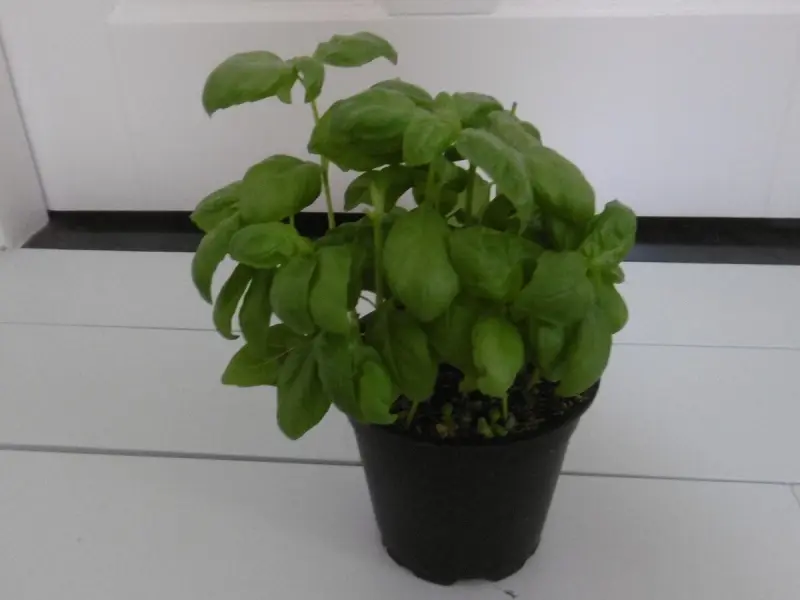
That grocery-store basil plant usually lasts about two weeks on the counter before it wilts, yellows, and collapses. It is not a sign that you lack a green thumb. Most supermarket herbs are dozens of seedlings crammed into one tiny pot, grown under greenhouse conditions your kitchen cannot match. With the right window, the right pot, and a few harvesting habits, a small row of herbs can supply fresh leaves for cooking most of the year.
Start With the Light You Actually Have
Light is the limiting factor indoors, far more than water or fertilizer. Even a bright-looking room gets a fraction of the light outdoors, because window glass, screens, and the angle of the sun all cut it down.
- South-facing windows are the best in the Northern Hemisphere, giving the most hours of direct sun, especially in winter.
- West-facing windows are a good second choice, with strong afternoon sun.
- East-facing windows get gentler morning sun and suit parsley, mint, and chives better than sun lovers like rosemary.
- North-facing windows are too dim for most culinary herbs without help.
Most herbs want at least 6 hours of direct sun a day. If you cannot provide that, a full-spectrum LED grow light is the fix. A basic clip-on or bar-style light runs about $20 to $50. Hang it 6 to 12 inches above the leaves and run it 12 to 14 hours a day on an outlet timer. Plants that get leggy, with long stretches of bare stem between leaves and stems leaning hard toward the glass, are telling you they need more light.
Which Herbs Do Well Indoors
Not every herb is equally happy inside. Here is a realistic ranking for a sunny sill.
Easiest: chives, mint, parsley (flat or curly), and oregano. They tolerate a bit less light and bounce back quickly after cutting. Mint spreads aggressively, so always give it its own pot.
Good with strong light: thyme, Greek oregano, and sage. These Mediterranean herbs like to dry out between waterings and do well in terra cotta.
Rewarding but fussier: basil. It loves warmth and bright light, and sulks below about 60°F. Keep it away from cold glass at night in winter.
Challenging: rosemary and cilantro. Rosemary needs very bright light and is prone to powdery mildew in still indoor air; it also hates both drought and soggy roots. Cilantro grows fast and bolts, sending up flowers and turning bitter, within a few weeks. Sow a small pinch of cilantro seed every three to four weeks for a steady supply instead of expecting one plant to last.
Starting from small nursery transplants is quickest. Seeds are cheap and work well for basil, chives, parsley, and cilantro, but expect four to eight weeks before your first real harvest.
What You'll Need
- Pots 6 to 8 inches across, each with a drainage hole
- Saucers or a shallow tray to catch water
- Bagged indoor potting mix (not garden soil)
- A handful of perlite to lighten the mix for thyme, rosemary, and oregano
- A small watering can with a narrow spout
- Liquid all-purpose or organic fertilizer
- Clean, sharp kitchen scissors or herb snips
- Optional: an LED grow light and timer
Potting Them Up
- Pick pots with holes. Decorative cachepots without drainage are the number-one killer of indoor herbs. If you love a solid pot, use it as an outer sleeve and keep the plant in a plastic nursery pot inside, emptying any water that collects.
- Choose the material. Unglazed terra cotta breathes and dries out faster, which suits thyme, rosemary, sage, and oregano. Glazed ceramic or plastic holds moisture longer, which suits basil, parsley, mint, and chives.
- Divide crowded grocery plants. Gently tip the basil out of its sleeve and tease the root ball into three or four clumps. Pot each clump separately. They will grow far stronger with room.
- Fill and plant. Fill the pot with moist potting mix, set the plant at the same depth it was growing, and firm the mix lightly. Leave about 1/2 inch of space below the rim for watering.
- Water thoroughly until water runs out the bottom, then let the pot drain completely before setting it back on its saucer.
Watering and Feeding
Poke a finger an inch into the soil. If it feels dry at that depth, water until it drains from the bottom. If it is still damp, wait. For most herbs on a sunny sill, that works out to every three to seven days, more often in summer and less in winter. Mediterranean herbs can go a little drier; basil and parsley should never wilt.
Empty saucers within 30 minutes. Roots sitting in water rot quickly, and fungus gnats breed in constantly wet soil.
Because potting mix has limited nutrients and frequent watering flushes them out, feed every four to six weeks during spring and summer with a liquid fertilizer mixed at half the label strength. In the darker months of November through February, when growth slows, feed every eight weeks or skip it.
Harvesting So They Keep Growing
The way you cut makes a bigger difference than most people expect.
- Never take more than one-third of the plant at a time. It needs leaves left to keep photosynthesizing.
- Basil, mint, oregano, and sage: cut the stem just above a pair of leaves. Two new shoots will grow from that point, making the plant bushier. Pinch off any flower buds as soon as they appear, or the plant will put its energy into seed and the leaves turn bitter.
- Parsley and cilantro: cut the outer stems at the base and let the center keep producing new growth.
- Chives: snip a few blades down to about 1 inch above the soil, working around the clump.
- Thyme and rosemary: trim the soft green tips, not the woody older stems, which are slow to regrow.
Frequent light harvesting, a few sprigs every few days, keeps herbs more productive than a big haircut once a month.
Common Problems and Fixes
Leggy, pale stems. Not enough light. Move to a brighter window or add a grow light, and cut the stretched stems back by a third to encourage branching.
Yellow lower leaves. Usually overwatering. Let the soil dry more between waterings and check that the drainage hole is not blocked.
Crispy brown edges. Underwatering, or dry winter air near a heating vent. Move the pot away from radiators and forced-air registers.
Tiny flies around the pots. Fungus gnats. Let the top inch of soil dry out fully between waterings and use yellow sticky traps.
White powder on leaves. Powdery mildew, common on rosemary and basil. Improve airflow with a small fan on low, space pots apart, and remove affected leaves.
Cold-damaged basil with black spots. Glass gets cold at night. In winter, slide pots back from the window after dark or put a sheet of cardboard between the glass and the plants.
Tips
- Rotate pots a quarter turn every few days so they grow evenly instead of leaning toward the glass.
- Wipe dust off windows in fall and winter; clean glass lets in noticeably more light.
- Keep pots out of reach if you have cats or dogs. Most culinary herbs are low risk, but some pets will chew anything.
- Set summer herbs outside on a porch from late spring to early fall once nights stay above 50°F, then bring them back in before frost.
A windowsill herb garden will not replace a backyard bed, but three or four healthy pots of basil, parsley, chives, and thyme can easily cover weeknight cooking. Once you have them thriving, try adding a pot of scallions regrown from grocery-store roots or a small dwarf bay laurel for soups.