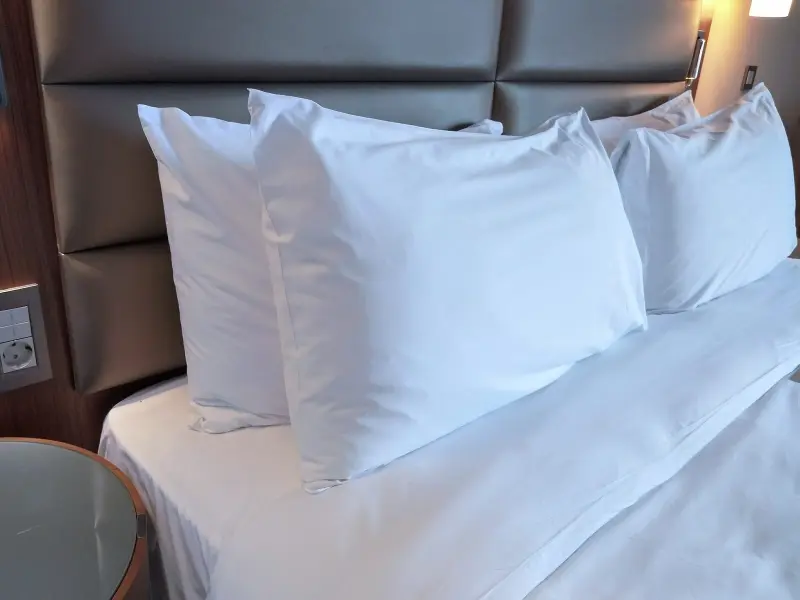
Pillowcases get washed every week or two. The pillows inside them often go years without a cleaning, quietly soaking up sweat, skin oils, and dust mites. The yellow stains you find when you finally peel off the case are mostly dried perspiration. Good news: most standard bed pillows can go straight into a home washer, as long as you know which ones and how to dry them.
First, Read the Tag
Every pillow sold in the US has a care label sewn into a seam. It is the single best guide, and it overrides any general advice, including ours. Here is what the common fills usually tolerate:
- Polyester fiberfill (down alternative): Machine washable in nearly all cases. The easiest pillow to clean.
- Down and feather: Usually machine washable on gentle. Drying takes a long time but works well.
- Cotton or wool fill: Varies. Some wool pillows are hand-wash only, and many cotton-filled pillows clump badly in a washer.
- Solid memory foam or latex: Do not machine wash. Agitation tears the foam, and it holds water like a sponge, making it nearly impossible to dry.
- Shredded memory foam: Some brands allow washing the cover only, some allow the whole pillow. Check the label carefully.
- Buckwheat hulls: Never wash the hulls. Empty them out and wash only the shell.
If the tag is missing and you do not know the fill, squeeze the pillow. Foam springs back slowly and feels dense. Fiberfill feels lofty and slightly crunchy. Down feels soft and compresses easily, and you may feel the occasional quill.
What You'll Need
- Mild liquid laundry detergent (powder can leave residue in dense fill)
- Two pillows of similar size and fill, for balance
- Two or three wool dryer balls, or clean tennis balls inside clean socks
- A large-capacity washer, ideally a front-loader or a top-loader without a center agitator
- A dryer with a low-heat or air-fluff setting
- Optional: a stain spray or a paste of oxygen bleach powder for yellowing
Step 1: Inspect and Pre-Treat
Strip off the case and any zippered protector. Check every seam for small tears. A pillow with an open seam will leak fill in the drum, and down feathers are tedious to pick out of a washer. Stitch small gaps closed with a needle and thread before washing.
For yellow sweat stains on white polyester pillows, mix a little oxygen bleach powder with warm water into a paste, dab it on the stained areas, and let it sit 20 to 30 minutes. Skip this on down unless the label specifically allows bleach.
Step 2: Load Two Pillows at a Time
A single pillow throws a washer off balance. On the spin cycle, it slams to one side and can trigger an error code or a lot of thumping. Washing two pillows together keeps the drum even.
If you have a top-loader with a center agitator, stand the pillows vertically on either side of the agitator rather than laying them flat. This reduces the twisting that can tear seams. If your pillows are king size and your washer is small, wash them one at a time and add a couple of bath towels to balance.
Step 3: Choose the Right Settings
- Cycle: Gentle or delicate
- Water temperature: Warm for polyester, cool to warm for down (follow the tag)
- Detergent: About half your usual amount. Too much soap is hard to rinse out of dense fill and leaves pillows stiff and sticky.
- Extra rinse: Yes, always
- Spin: The highest spin the tag allows. The more water you remove now, the shorter drying will be.
Skip fabric softener. It coats fibers and down clusters, reducing loft and making pillows go flat sooner.
Step 4: Squeeze Before Drying
When the cycle ends, lift out a pillow and press it. If water drips freely or soap suds appear, run another rinse and spin cycle. It is better to spend 20 more minutes in the washer than to dry soap into the fill.
Step 5: Dry Low and Slow
This is the step that makes or breaks the result.
Put both pillows in the dryer with two or three dryer balls or sock-wrapped tennis balls. The balls bounce around and break up clumps as they form. Set the dryer to low heat or air fluff. High heat can scorch polyester fiberfill and make down brittle.
Every 30 minutes, take the pillows out, shake them hard, and squeeze any lumps apart with your hands. Then return them for another round.
Plan on these rough timeframes:
- Polyester fiberfill: About 1 to 2 hours
- Down and feather: About 2 to 3 hours, sometimes more
Step 6: Confirm It Is Truly Dry
A pillow can feel dry on the surface and still be damp in the center, especially down. Damp fill grows mildew and develops a musty smell within a day or two. Press your face against the middle of the pillow and sniff. Any cool or damp feeling, or a faint wet-feather smell, means more time in the dryer.
If you have the option, finish with a few hours outdoors in the sun on a dry day, flipping halfway through. Sunlight helps with any lingering odor.
Spot Cleaning Pillows That Can't Go in the Washer
For memory foam and latex:
- Remove the cover and wash it according to its own label.
- Vacuum both sides of the foam with an upholstery attachment.
- Mix a teaspoon of mild detergent in a cup of warm water. Dampen a cloth, wring it until nearly dry, and blot stained areas. Do not soak the foam.
- Blot with a clean, damp cloth to rinse, then air dry flat in a well-ventilated room for 24 hours or until completely dry.
- Sprinkle baking soda over the foam, leave it a few hours, then vacuum it off to absorb odors.
How Often Should You Do This?
A good routine is to wash washable pillows every three to six months, more often if you sweat at night, have allergies, or let pets on the bed. A zippered pillow protector under the case cuts down on how often the pillow itself needs washing, and protectors can go in with your weekly sheets.
When to Replace Instead of Wash
Washing refreshes a pillow but cannot restore one that has broken down. Try the fold test: fold the pillow in half and let go. A healthy pillow springs back open. One that stays folded, or one with permanent lumps after drying, has lost its support. As a rough guide, polyester pillows last about one to two years, while good down pillows can last several years with care.
Common Mistakes to Avoid
- Washing a single pillow alone and wondering why the washer is banging
- Using a full dose of detergent
- Drying on high heat to save time
- Putting pillows back on the bed while the center is still damp
- Machine washing solid foam because "it looked fine"
The Takeaway
Most polyester and down pillows handle a gentle machine wash just fine. Balance the load, go light on soap, and dry on low with dryer balls until the center is completely dry. Do it a couple of times a year, and add a protector so the next wash is easier. While the pillows dry, it is a good time to vacuum the mattress and flip or rotate it.