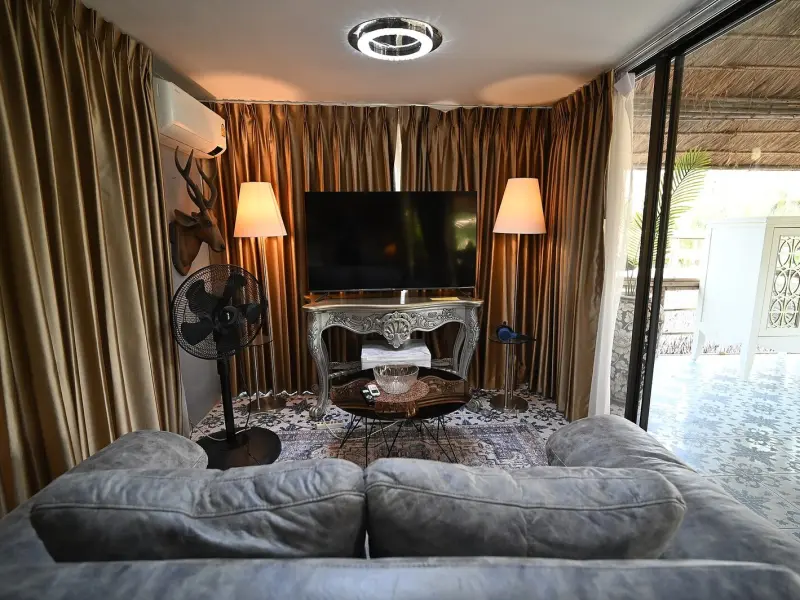
Most rentals come with one light per room, usually a flush-mount fixture in the middle of the ceiling that throws harsh, flat light everywhere and leaves the corners dim. Designers solve this with "layers": several light sources at different heights, each doing a different job. You can do the same in a small apartment with plug-in lamps and a few LED tricks, for a few hundred dollars, without touching the wiring or upsetting your landlord.
The Three Layers, Explained
Ambient light is the general, overall glow that lets you walk through a room without bumping into things. In most apartments, it's the ceiling fixture. Good ambient light is soft and even.
Task light is focused, brighter light where you actually do things: reading, cooking, working at a desk, applying makeup.
Accent light is the decorative layer: light that highlights a plant, a shelf, a piece of art or a textured wall. It adds depth and makes a small room feel bigger by drawing the eye to its edges.
A room that feels "cozy" in the evening almost always has light coming from at least three places at different heights, and usually very little coming from the ceiling.
Start With the Bulbs
Before buying fixtures, look at what's already in them. The right bulb fixes a surprising amount.
- Color temperature: measured in Kelvin. For living spaces and bedrooms, 2700K gives a warm, incandescent-like light. 3000K is slightly crisper and works well in kitchens and bathrooms. 4000K and above reads as cool and office-like; it's useful for a work desk but harsh in a living room. Keep the color temperature consistent within a room, or it will look patchy.
- Brightness: measured in lumens. As a rough guide, a standard 60-watt-equivalent LED gives about 800 lumens; a 40-watt equivalent, about 450.
- Color rendering: look for a CRI (color rendering index) of 90 or higher on the package. Colors, skin tones and food look noticeably more natural.
- Dimmability: if you plan to use plug-in dimmers, buy bulbs labeled dimmable.
Swapping bulbs is the cheapest upgrade there is, often $3 to $8 per bulb.
Layer 1: Fix the Ambient Light
You probably can't replace the ceiling fixture, but you can make it work better.
- Change the bulb to a warm, high-CRI LED, and consider a slightly lower output so it's less glaring.
- Use smart bulbs if there's no dimmer switch. A dimmable smart bulb lets you lower the overhead light in the evening using an app or remote, with no wiring changes.
- Add a floor lamp that bounces light. A torchiere or uplight floor lamp aims light at the ceiling, which reflects it back down softly. In a small room, one good uplight in a corner can replace the overhead light for most of the evening.
- Plug-in pendants. Swag pendant lights come with a long cord and a plug. You hang them from a ceiling hook and run the cord along the ceiling and down the wall to an outlet. They're a renter-friendly way to put light over a dining table.
Layer 2: Add Task Lighting Where You Work
Walk through your day and notice where you squint.
- Reading chair or sofa end: a floor lamp or table lamp positioned slightly behind and to the side of your shoulder, with the bottom of the shade around eye level when seated. An adjustable arm lamp is ideal.
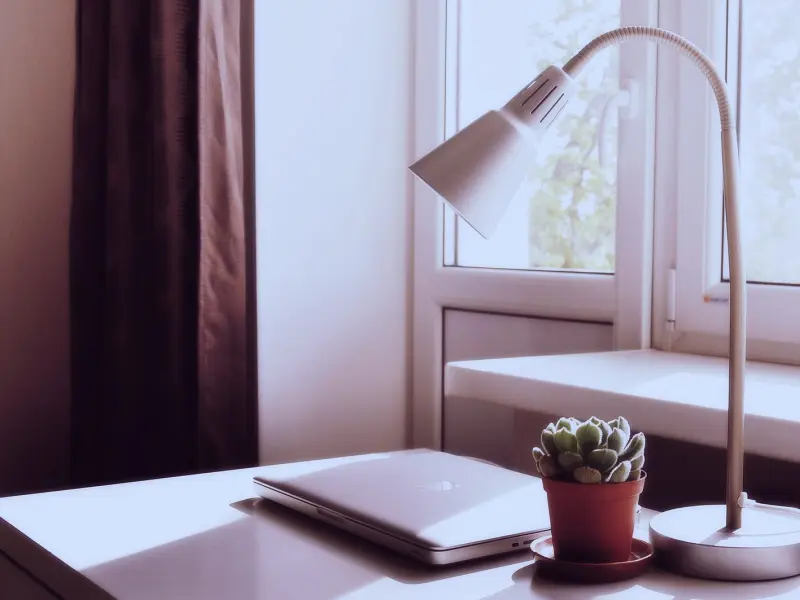
- Desk: an adjustable desk lamp placed on the side opposite your writing hand, so your hand doesn't cast a shadow. A neutral 3000K to 4000K bulb helps with focus.
- Kitchen counters: rental kitchens are often lit only from behind you, so you work in your own shadow. Plug-in or battery-powered LED under-cabinet light bars attach with adhesive or magnets and cost roughly $20 to $60 for a set. Look for models with a plug-in transformer if there's an outlet nearby, or rechargeable motion-sensor bars if not.
- Bathroom mirror: overhead lighting creates shadows under the eyes. A pair of plug-in wall sconces or a lighted mirror on either side of the face gives more even light.
- Bedside: small table lamps or plug-in wall sconces with a cord cover. Wall sconces free up space on a tiny nightstand.
Layer 3: Accent Lighting for Depth
This is the fun part, and it's what makes a small apartment feel designed.
- LED strip lights behind a TV, under a floating shelf, or along the top of a bookcase create a soft glow that visually pushes walls back. Choose warm white, not color-changing, for an elegant look.
- Picture lights in battery-powered versions mount above framed art with no wiring.
- Uplight a plant. A small, inexpensive canister uplight placed on the floor behind a tall plant casts dramatic leaf shadows on the wall.
- Candles or flameless candles add flicker and warmth. LED candles are safer in rentals and around pets.
Pulling It Together: A Sample Living Room
For a typical 12 x 14 foot living room in an apartment, you might have:
- Overhead fixture with a warm, dimmable smart bulb (ambient)
- A torchiere floor lamp in one corner (ambient)
- An adjustable reading lamp next to the sofa (task)
- A small table lamp on a console or bookcase (accent and ambient)
- A warm LED strip behind the TV or a shelf (accent)
That's five light sources at different heights. In the evening, turn off the overhead light entirely and use the other four.
Budget: if you shop carefully, roughly $150 to $350 total, and everything moves with you.
Safety Notes
- Don't overload outlets or power strips. Use power strips with built-in overload protection, and avoid chaining one power strip into another.
- Keep cords out of walkways or cover them with flat cord protectors. Never run extension cords under rugs, where heat can build and damage goes unnoticed.
- Match bulbs to fixtures. Check the maximum wattage label on every lamp. LEDs draw far less power, so they're usually well within the limit.
- Use adhesive hooks and clips rated for the weight when hanging cords or strips, and read your lease before drilling anything.
Common Mistakes
- Relying on one bright ceiling light. It flattens everything and makes small rooms look smaller.
- Mixing cool and warm bulbs in the same room.
- Shades that are too small or too opaque, which cut a lamp's useful light in half.
- Placing every lamp at the same height. Mix floor, table and wall-level light.
- Forgetting about switches. Smart plugs let you turn a group of lamps on or off together, which you'll appreciate when you come home at night.
Bringing It Home
Layered lighting is less about spending money and more about putting light where you need it. Start by swapping bulbs, add one good lamp to each room, then layer in accent light as your budget allows. Every piece is portable, so the lighting you build now will come with you to the next place.